

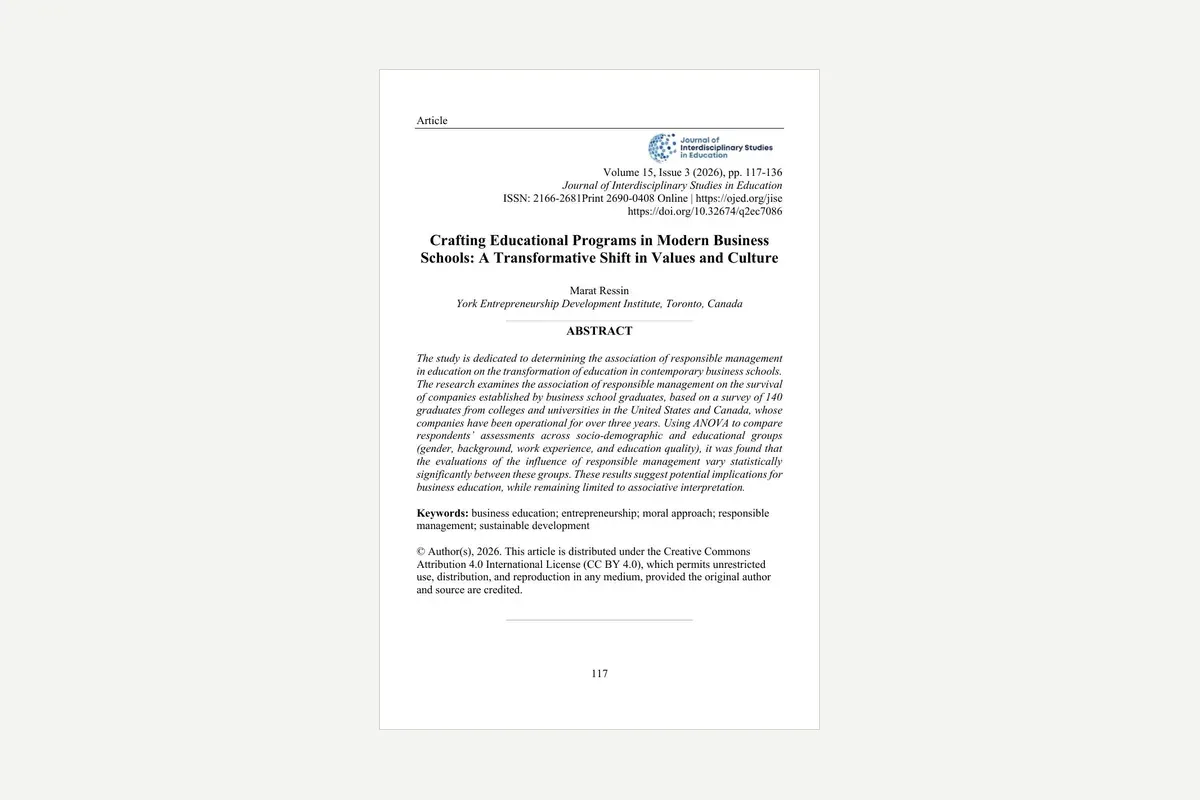
A study funded by CFIR asked 148 business owners what they took from business school. All of them had studied business at a college in Canada or the U.S., and their companies had been open for at least three years and were making a profit.
The study looked at five things: gender, how much money the owner’s family had, their grades, their years of work experience, and how well school taught them to run a business responsibly. Running a business responsibly means being honest, planning for the long run and caring about staff, customers and the community.
Only one of the five made a real difference. Owners who learned to run a business responsibly had more money left over after taxes, comparing businesses in the same industry. Gender, family money, grades and work experience made little difference.
The effect is real but moderate: it explains about 9 to 12% of the gap between businesses. A second, different test gave the same answer.
The paper points to three habits that may explain it: sticking to your values when you make business decisions, planning for the business to last, and thinking about everyone the business affects.
The study shows that these things go together. It does not prove that one causes the other.
The paper is published open access. Read it in full, with the figures, the method and the licence.